
AWC Electronics - PAK-VI
Note: The PAK-VIa is primarily for reading keyboard data. Although you can use it to read a PS/2 mouse, if you want to work with a mouse, be sure to check out the PAK-XI.
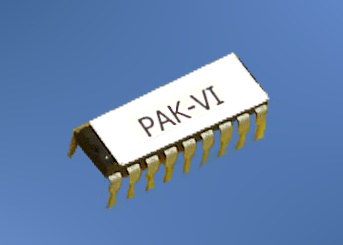
Have you ever wanted to hook up a lot of switches to a Basic Stamp or other microcontroller? How about 101 switches? With the new PAK-VIa Keyboard Coprocessor, you can connect a standard PS/2 keyboard (or other PS/2 device) to practically any microcontroller.By default, the PAK-VI sends you regular ASCII characters via an RS232 connection (including single-byte ASCII codes for function keys and special keys). The PAK handles all the decoding and manages the status LEDs (Caps Lock, for example). This makes using the PAK very simple (look at this simple example).
32 character buffer!
Lower power consumption (7mA maximum)!
Hardware selectable initial mode!
In addition, you can also set the PAK to read the keyboard in raw mode. This provides the ultimate flexibility. You can read every key on the keyboard just like a regular PC does.
Instead of a keyboard, you can connect the PAK to a PS/2 mouse. By changing to raw mode, you can read the raw mouse data directly from the mouse! This gives you a highly accurate X/Y position at a very low cost. However, if you are only interested in reading position data from a mouse, you might consider the PAK-XI.
Here are some other ideas:
Use a numeric keypad for data entryUse a wireless keyboard to control a robot
Use a track pad to set analog values
Relabel keys to make complex custom control panels
Build a Morse code keyer (read about this project in our document library)
Robotic artwork (see Josh Nimoy's robotic typeface project, click on technical to see the PAK)
The Details
With the PAK-VIa you receive the PAK-VIa chip, a ceramic resonator, and a data sheet that explains how to use the chip (view the datasheet online). You can also get free plans for a Morse code keyboard using the PAK-VI. Also, check out an example of using a mouse with the PAK-VI.
The PAK-VIa has a 32-byte buffer (increased from 16) and consumes 4 to 7mA! NOTE: The PAK-VIa has a slightly different pin out than the original PAK-VI, which is no longer available.
Get it Now!
Try a PAK-VI for 21 days. If you aren't delighted, just send it back undamaged for a full refund of your purchase price. But once you see your Stamp reading a keyboard, you won't want to be without it.
Add to Cart PAK-VIa Coprocessor $29.95 each
Add to Cart PS/2 cable (female, 4 wires) $3.00 [out of stock]
Key Benefits
-
Saves your valuable development time
-
Handles the PS/2 serial protocol
-
Also decodes scan codes to ASCII characters
-
Raw mode allows full control or communications with mice or other non-keyboard devices
-
Simple RS-232 interface
-
Optionally manages keyboard LEDs
-
Buffers data for slower processors
-
Low power consumption
Key Links
Site contents © 1997-2018 by AWC, Houston TX (281) 334-4341